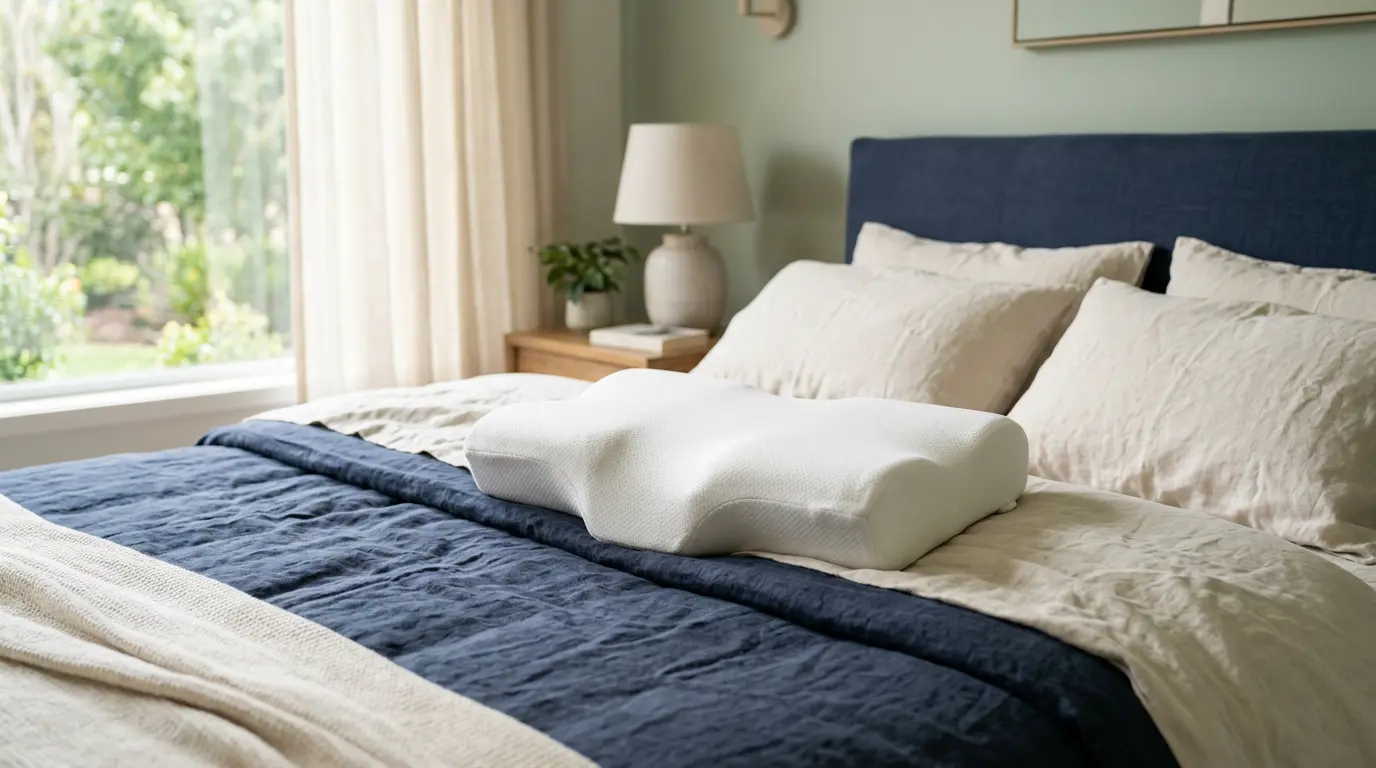
If you wake up tired after a full night in bed, snore loudly, or have been told you stop breathing during sleep, you are not alone. Obstructive sleep apnea (OSA) affects millions of adults, and many people start their search for relief with the simplest thing in the bedroom: the pillow. One product that comes up often is the Derila Ergo memory foam pillow, known for its distinctive butterfly-shaped contour.
According to a recent announcement covered by USA Today, the company has introduced its Derila Ergo memory foam pillow with a butterfly contour design and materials for U.S. consumers. So can a pillow like this actually help with sleep apnea? Here is what you should know.
What happens during sleep apnea
In obstructive sleep apnea, the soft tissues at the back of the throat relax and partially or fully block the airway during sleep. Breathing pauses, oxygen levels dip, and the brain briefly wakes you to reopen the airway — often without you remembering it. The result is fragmented sleep, daytime fatigue, morning headaches, and, over time, higher risk for heart and metabolic problems.
Sleep position matters. For many people, symptoms are worse when lying flat on the back, because gravity pulls the tongue and soft palate toward the throat. Side sleeping and keeping the head and neck in a neutral, slightly extended position tend to keep the airway more open.
How an ergonomic pillow can help
A pillow cannot cure sleep apnea, but it can make the positions that favor open breathing easier to maintain. An ergonomic contour pillow is designed to:
- Support neutral neck alignment so the chin does not tuck toward the chest, which can narrow the airway.
- Encourage comfortable side sleeping, the position many sleep specialists suggest for positional snoring and mild positional apnea.
- Reduce tossing and turning caused by neck and shoulder discomfort, so you stay in a supportive position longer.
What makes the Derila Ergo different
The Derila Ergo uses a butterfly contour: a raised center and curved wings that cradle the head while leaving room for the shoulders when you lie on your side. The memory foam responds to body heat and pressure, molding to the shape of your head and neck instead of pushing back like traditional fiber fill.
The design details and materials are described in the USA Today press release on the Derila Ergo, which outlines the butterfly contour and the memory foam construction aimed at U.S. sleepers.
Who may benefit most
- People who snore mainly when sleeping on their back.
- Those diagnosed with mild, position-dependent sleep apnea who want help staying on their side.
- CPAP users looking for a pillow that keeps the neck aligned and leaves space around the mask.
- Anyone whose neck or shoulder pain keeps them shifting positions through the night.
Tips for sleeping better with apnea
- Sleep on your side and keep your head in a neutral line.
- Avoid alcohol and sedatives close to bedtime.
- Keep a consistent sleep schedule, even on weekends.
- Maintain a healthy weight, which can reduce airway pressure.
- Follow your clinician's treatment plan consistently.
The bottom line
An ergonomic pillow like the Derila Ergo can be a useful, low-effort part of a better-sleep routine, especially if your snoring or apnea gets worse on your back. Its butterfly contour and memory foam are built to keep your head and neck aligned and make side sleeping more comfortable. Pair it with proper medical guidance, and you give yourself the best chance at quieter, deeper, more restorative sleep.
Further reading · USA TodayDerila Ergo Memory Foam Pillow Reviews: Company Announces Butterfly Contour Design and Materials for U.S. Consumers(opens in a new tab)